
Connect & Engage
When participants’ levels of connection and engagement are high their possibility of finding enjoyment and value in recreation experiences is enhanced. In moments of connection you feel a link, a spark, with the program and with other people. Connection promotes engagement. When engaged, you’re focused, occupied, fully involved, and further building upon those initial connections. Regularly repeated experiences of connection and engagement improve the likelihood of three critical participant outcomes: Unity, Community, and Belonging.
by Jeff Witman, The Woodlands; Brian Malcarne, York College; MW Doerfler, Quaker Valley Schools
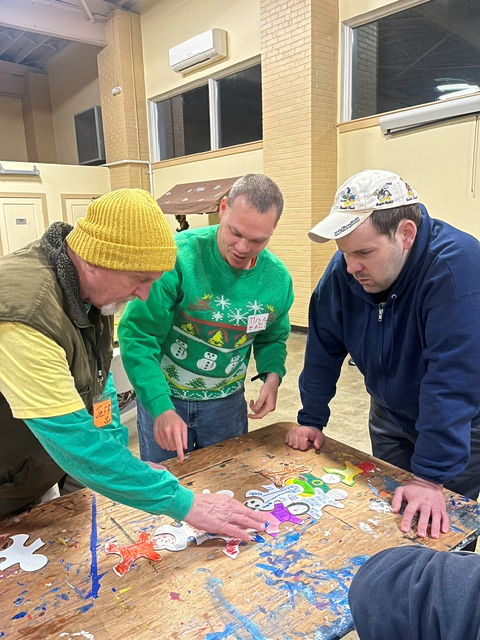
When participants’ levels of connection and engagement are high, their possibility of finding enjoyment and value in recreation experiences is enhanced. In moments of connection you feel a link, a spark, with the program and with other people. Connection promotes engagement. When engaged, you’re focused, occupied, fully involved, and further building upon those initial connections. Regularly repeated experiences of connection and engagement improve the likelihood of three critical participant outcomes: Unity, Community, and Belonging.
Unity: being together; at one with someone or something
Community: a feeling of fellowship with others- shared attitudes, interests, goals
Belonging, a feeling of security and support when there’s a sense of acceptance, inclusion and identity for a member of a certain group
An important role of program leaders is to actively promote an environment and culture that supports connection and engagement. There are a variety of strategies and techniques that can be applied to positively impact participant experience this way and promote the anticipated outcomes of unity, community, and belonging. As you seek for ways to encourage participant connection and engagement, here are 14 thoughts to get you started.
1. Add Some “Wow” Factor to your program offerings
-Design your program offerings with connection and engagement in mind.
-Offer reinforcing, interesting activities/experiences: diversity, novelty, excitement! Find and utilize resources which provide you with great ideas (a personal favorite, and it’s free, Chris Cavert’s FUNdoing Fridays- https://www.fundoing.com/.)
2. Consider Individual Needs
-Meet participants where they are at, remembering that one size may not fit all.
-As you support overall group success, be on the lookout for opportunities to support successful moments for individuals.
-Differentiation/flexibility: tailoring facilitation to meet individual needs.
3. Customize for Success
-We cannot direct the wind, but we can adjust the sails.
-Consider adaptations with the space, task, equipment, and/or people (rules and rewards sometimes too).
4. Participants’ Picks Matter
-Offer options and opportunities for autonomy to promote engagement.
-Identify and utilize preferences/choices. This can include decisions before and during the activity- (for example, you choose to do ceramics and later select the colors you’ll use).
5. Guide the Process
-Create opportunities for connection and support; guide individuals as needed.
-Promote “flow” experiences by understanding and matching program challenge level with participant skill level.
6. No Drama, No Trauma
-Ensure participant safety- physical, social, and emotional.
- Utilize trauma-informed practices (for a comprehensive list, check https://www.nea.org/professional-excellence/student-engagement/tools-tips/trauma-informed-practices).
7. Enhance Communication
-Prompts can add value and make a difference in participant experience.
-Use visual aids and pictures with directions and explanations; Accommodate non-readers.
8. Encourage Participation/Discussion
-Learn how to accommodate varied communication skill sets.
-Use AAC (Augmentative and Alternative Communication) to make conversations reciprocal.
-Use patience and consistency to promote involvement.
-Apply the Six-Second Rule (see details provided) to give participants time to process and respond.
The Six-Second Rule (Applied ABC, 2026):
- State the instruction or question clearly.
- Wait about six seconds (silently).
- If needed, repeat using the same words.
9. Rise… Grind… Shine… Repeat…
-Develop structure and routines that promote self-regulation/reduce stress.
Routinely begin each session in a predictable way. For example, ask a simple question of the day. (e.g., Do you like cake or pie for dessert?) This encourages belonging and gives a voice to every participant at every session.
10. Highlight Individuals
-Catch participants doing something right.
-Recognize progress and accomplishments.
11. Focus on Participants
-Everyone you will ever meet knows something you don’t.
-Mitigate distractions (e.g., hunger, fatigue, stress, phones, wanderers). Focus!
-You cannot truly listen to someone while doing something else at the same time.
-Be an active, empathic listener; two ears and one mouth = listen twice as much as you talk.
12. Quit While Ahead
-End an activity before interest in it ends.
13. Share the Stage
-Encourage participant involvement, leadership, and service when planning/implementing activities.
-Model connecting/engaging efforts and behaviors.
14. Walk the Talk
-Model connecting/engaging efforts and behaviors.
We recommend you frequently review and add to this list of ideas for promoting connection and engagement in your programs. The way you structure and lead programs can increase their potential impact and enhance participant gains. The added value of each item can create win-win moments for both you and your participants. Collectively, they represent a blueprint for adding the powerful qualities of unity, community, and belonging to all of your programs.